
Blog

Blog

How Do Hadith Guide Us in Modern Times?

Get in Touch Golden Age of Islam & Hadith in the Modern World Hadiths are the sayings and actions of Prophet Muhammad (peace be upon him). They guide us in living a good life. Even in modern times, Hadiths help us make the right choices. They teach us kindness, honesty, and respect. At Masha Books, we believe Hadiths are like a treasure chest of wisdom, especially for children. Let’s explore how they guide us today. Understanding Hadiths Hadiths are simple lessons from the Prophet’s life. They explain how to behave, pray, and treat others. For example, one Hadith says, “Kindness is a mark of faith.” This means being kind is important. In our books, we use stories to show these lessons. Children can easily understand and follow them. Hadiths are not old-fashioned; they are timeless and useful for everyone. Hadiths in Daily Life Hadiths teach us how to live peacefully. They remind us to share, help others, and be honest. For instance, the Prophet said, “The best among you are those who have the best manners.” This teaches us to be polite and respectful. In our books, we include fun activities and stories to help children practice these values. Hadiths make our daily lives better and happier. Hadiths and Technology In modern times, technology is everywhere. Hadiths guide us on how to use it wisely. The Prophet said, “Whoever believes in Allah and the Last Day, let him speak good or remain silent.” This teaches us to use social media kindly. In our books, we include tips on using technology responsibly. Hadiths help us balance modern life with good values. Building Good Habits Hadiths encourage us to build good habits. For example, the Prophet said, “Cleanliness is half of faith.” This teaches us to stay clean and healthy. In our books, we use simple examples to show how to keep clean. Children learn to brush their teeth, wash their hands, and keep their rooms tidy. Hadiths help us grow into responsible individuals. Respecting Everyone Hadiths teach us to respect everyone, no matter their age, race, or religion. The Prophet said, “All humans are equal, like the teeth of a comb.” This means no one is better than others. In our books, we include stories about friendship and respect. Children learn to treat everyone fairly. Hadiths remind us that kindness and respect are important in modern times. Helping Others Hadiths inspire us to help those in need. The Prophet said, “The one who helps others will be helped by Allah.” This teaches us to be generous. In our books, we share stories about sharing toys, helping neighbors, and donating to charity. Children learn the joy of giving. Hadiths guide us to make the world a better place. Staying Positive Life can be tough, but Hadiths teach us to stay positive. The Prophet said, “Amazing is the affair of the believer; everything is good for him.” This means we should always look for the good in every situation. In our books, we include stories about overcoming challenges. Children learn to stay hopeful and strong. Hadiths give us courage in modern times. Hadith Encourage Us to Forgive Sometimes people make mistakes, and we might feel hurt. The Prophet (peace be upon him) said, “Be merciful to others, and you will receive mercy.” Forgiving others helps us feel better and strengthens friendships. Holding onto anger can make us sad, but letting go and forgiving brings peace to our hearts. Learning to forgive makes life happier and less stressful. Hadith Help Us in Everyday Life Hadith are not just stories from the past, they guide us in our daily lives. They teach us to be kind, honest, patient, and grateful. At Masha Books, we believe Islamic children’s books should include these lessons in simple words so young minds can understand them. By following Hadith, we can become better people and make the world a kinder, happier place for everyone. Islamic knowledge books are important for keeping students engaged. These books blend stories, moral lessons, and interactive activities. They support reading skills, critical thinking, and a deeper understanding of different cultures. For high-quality Islamic children’s books, we recommend Masha Books. Their collection is designed to inspire young minds and teach valuable lessons. Make learning more meaningful and enjoyable with Masha Books. Explore their range today and see the positive impact in your classroom.
Blog

How Do Islamic Knowledge Books Contribute to Increased Student Engagement in Schools?

As students, parents, and teachers, we all want learning to be fun and meaningful. One powerful way to make this happen is through Islamic knowledge books for children. These books not only teach valuable lessons from our faith, but also help students stay interested and excited about learning. In schools, they are becoming a great tool to improve student engagement and make education more enjoyable. Get in Touch Making Learning More Meaningful Islamic knowledge books help students connect what they learn in school with their daily lives and beliefs. When children read stories that include Islamic values, they understand that learning goes beyond the classroom. It shows them how faith is part of their everyday actions. This connection makes students more interested and motivated to learn in all subjects. Building a Strong Moral Foundation Islamic books teach important values such as honesty, kindness, and patience. Reading about these qualities encourages children to apply them in daily life. Schools that use these books support students in developing both knowledge and good character. They learn to treat friends, teachers, and family with respect, helping to build a positive school environment where everyone feels valued and included. Making Learning Interactive Many Islamic books include quizzes, puzzles, and activities that make learning fun and interactive. Instead of only listening, students can take part by solving problems, drawing, or acting out stories. This active approach keeps them engaged and makes it easier to understand challenging topics. When students enjoy learning, they focus better and perform well in school. Connecting Faith with Education Sometimes, school subjects can feel separate from our faith. However, Islamic knowledge books show how Islam is connected to subjects like science, history, and math. Students learn about great Muslim scientists and how math was used in Islamic architecture. This makes learning more meaningful and shows that Islam encourages the pursuit of knowledge. It also helps students feel proud of their learning and heritage. Encouraging Critical Thinking Islamic knowledge books often include questions and real-life situations that encourage students to think deeply. They promote discussions and allow students to share their opinions. This helps build critical thinking and reasoning skills. Instead of just memorizing facts, students learn to understand and explain ideas. This active learning keeps them interested in lessons. Teachers also notice that students ask more questions and take part more actively when using these books. Enhancing Language and Reading Skills Reading Islamic books helps improve vocabulary and understanding. These books are often written in clear, simple language that is easy for young readers to follow. Regular reading builds fluency and boosts confidence. Schools that use these books often see improvement in students’ language skills. The interesting content also encourages reluctant readers to read more. Strong reading skills support learning in all subjects, making school more enjoyable and effective. Unity and Respect In schools with students from different backgrounds, Islamic books help teach the value of unity. They show that everyone deserves respect, no matter their religion or culture. These books include stories of the Prophet (PBUH) showing kindness to all people. Reading these stories encourages students to be more accepting and friendly. This helps create a peaceful and welcoming environment for everyone at school. Strengthening Parent-Child Bonds Parents often read Islamic books with their children at home, which helps strengthen family bonds. Schools that suggest these books often see more involvement from parents in their children’s learning. Families talk about the stories and lessons together, which supports what students learn in school. When parents and teachers work as a team, students do better. These books help connect home and school, creating a strong and supportive learning environment. Encouraging Family Involvement Many Islamic books include activities that we can do with our families. Parents and siblings can read with us, discuss lessons, or even help with projects. This makes learning a shared experience. When families get involved, we feel more supported in our learning. It also helps us grow closer to our loved ones while building both our faith and knowledge. The Role of Illustrations and Design Children’s Islamic books often have colorful illustrations. Visuals make stories more appealing and easier to understand. Well-designed books capture attention and aid memory. Students are more likely to read books that look fun and engaging. Publishers like Masha Books focus on high-quality designs to enhance learning. Attractive layouts and pictures make these books a favorite among young readers. Why Choose Masha Books? Islamic knowledge books are important for keeping students engaged. These books blend stories, moral lessons, and interactive activities. They support reading skills, critical thinking, and a deeper understanding of different cultures. For high-quality Islamic children’s books, we recommend Masha Books. Their collection is designed to inspire young minds and teach valuable lessons. Make learning more meaningful and enjoyable with Masha Books. Explore their range today and see the positive impact in your classroom.
Blog

What Are the Achievements of Islamic Women in Scientific and Educational Endeavors?

When we think about science, education, and discovery, it’s important to remember the valuable role Islamic women have played in these fields. For centuries, they have been learning, teaching, and making important contributions. In this article, we will look at the achievements of Muslim women in science and education and how their stories continue to inspire the books we enjoy today. Get in Touch Women of Knowledge in Islamic History From the early days of Islam, women were encouraged to learn and seek knowledge. The Prophet Muhammad (peace be upon him) emphasized that learning is important for everyone, both men and women. Many women became respected scholars, like Aisha bint Abu Bakr, the Prophet’s wife. She taught thousands and shared her deep understanding of hadiths. Her knowledge helped shape Islamic education and still guides us today. Scientists and Scholars of the Golden Age During the Islamic Golden Age, many women played key roles in science and education. One example is Fatima al-Fihri, who founded the world’s first university in Fez, Morocco, still standing today. Her passion for learning helped many students grow in knowledge. Her work shows that Muslim women were not just learners, but also leaders in shaping education. The Fields of Medicine and Healing Muslim women also played a key role in medicine. They studied the human body and learned how to treat illnesses with care and skill. One well-known woman was Al-Shifa bint Abdullah. She was a talented doctor who also shared her knowledge by teaching others. Rufaida Al-Aslamia, known as the first nurse in Islam, cared for wounded soldiers during battles and trained other women to care for the sick. Their dedication shows that healing is not only a science, but also an act of compassion. Writers and Teachers Many Muslim women became respected writers and teachers. They wrote books, poems, and letters on topics like science, daily life, and faith. Through their words, they inspired others to learn and think deeply. Their writings, full of wisdom and meaning, are preserved in libraries and history books. Reading them fills us with pride and gratitude for their dedication and passion for knowledge. Mathematics and Astronomy Did you know some Muslim women were brilliant mathematicians? Mariam al-Asturlabi made advanced tools for stars and navigation. Her work helped sailors travel safely. Another scholar, Labana of Cordoba, solved complex math problems. These women loved numbers and the stars, proving that science is full of wonders. Their achievements remind us that curiosity leads to great discoveries. Modern Muslim Women in Science Today, Muslim women continue to achieve amazing things. Dr. Hayat Sindi develops medical tools to support healthcare in poor communities, while Dr. Nergis Mavalvala studies black holes and the universe. Their accomplishments prove that science has no limits. They inspire us to stay focused and follow our dreams, showing that with passion and effort, we too can achieve great things. Women Supporting Other Women Throughout history, Islamic women have supported one another. They helped each other go to school, learn new things, and reach their goals. In many places, women started learning circles where they read books and discussed ideas. This reminds us that teamwork and friendship play a big role in learning. Just like they supported one another, we can also help our friends grow and succeed in their learning journey. Continuing the Legacy Today Today, many Muslim women carry on this proud legacy. They work as scientists, doctors, teachers, and writers sharing knowledge and making a difference. Their achievements remind us of the strong women before them and inspire us to keep learning, stay curious, and never give up. Why Representation Matters Seeing successful Muslim women in books builds confidence. It shows that we all have a place in science and education. When children see role models who resemble them, they dream bigger. Masha Books encourages this by sharing inspiring stories of Muslim achievers in a way kids can enjoy and relate to. How We Can Follow Their Footsteps Now is the time to make a difference. By reading, staying curious, and asking questions, we begin building a bright future. Joining science clubs, writing, or helping others can lead to great achievements. Let’s honor these women by learning from their journeys. With the right books and mindset, we can achieve anything! Learning with Masha Books At Masha Books, we believe every child should know about the great Muslim women who helped build our world of knowledge. Our books are made to teach, inspire, and bring joy. When children read about the heroes of the past, they dream about what they can become. Let’s learn together, one story at a time. With Masha Books, learning is fun, inspiring, and filled with hope.

Blog

Inspiring Islamic Story Books for Children

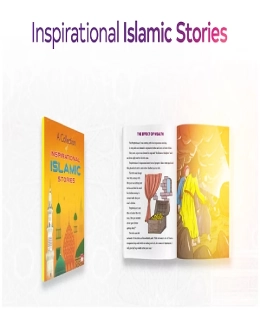
Inspiring Islamic Stories for Kids Stories have a profound impact on a child’s development, shaping their values, beliefs, and character. In the Islamic tradition, there are too many such stories, with their wisdom, bravery, and moral teachings. They teach not just amusement, but moral qualities that are vital to a good education. So, let’s take a look at some of the most uplifting Islamic tales for children. How Inspirational Stories Help Shape Children’s Character Inspirational Islamic stories are so important in a child’s life. They are a portal to grasping such difficult things as integrity, courage, compassion. Here’s how: Building Character and Morals Children learn by example. When they read of heroes who show courage, wisdom and generosity, they are more likely to follow these virtues in their own lives.   Enhancing Empathy and Compassion Stories about struggles and triumphs help children develop empathy. They become more able to understand the world from other people’s points of view, and that leads to empathy and sympathy for others.   Boosting Imagination and Creativity Stories activate the child’s imagination and get them imagining what is happening and who is in it. It also stimulates their creativity so they can create their own ideas and stories.   Strengthening Cultural and Religious Identity Motivational tales from Islamic tradition allow children to engage with their cultural and religious background. They hear about important people and things and they feel proud and part of it.   Developing Language and Communication Skills Listening to or reading stories enhances vocabulary and language skills. Children learn new words and phrases, improving their understanding and communication abilities.   Encouraging Positive Behavior Positive stories can encourage children to develop good habits and practices. When they see their heroes treat each other kindly, bravely, and honestly, they want to do the same.   Providing Comfort and Hope Inspirational stories can be a source of comfort during difficult times. They prove that the impossible is possible, that hope and strength will prevail over adversity.   Promoting Critical Thinking Reading a story is a way of developing the ability to analyze the ways in which characters behave, make decisions, and ultimately what they do. Children also learn to think about alternative outcomes and about the effects of actions, and they improve their skills in solving problems. Want to know more about Islamic Children’s Books in Shaping Young Minds? Click here to read Inspiring Stories of Islamic Greatness and Legacy The Story of Prophet Muhammad (PBUH) and the Spider:During the time of the Prophet Muhammad (PBUH) when he was preaching Islam, he was in a lot of danger. On one occasion, hiding in a cave with his companion Abu Bakr, enemies were bearing down on them. Miraculously, a spider hung a web across the mouth of the cave. Their chasers, spotting the web, thought that no one could have passed through it unobserved. This delicate web taught a powerful lesson in faith and divine protection. Life’s grand design can be shaped by even the tiniest organisms. The Courage of Bilal ibn Rabah: Bilal ibn Rabah, an Ethiopian slave, converted to Islam in the face of intense torment. His unwavering faith and dedication earned him immense respect. Bilal’s courage shone when he refused to renounce his faith under torture. Chosen as the first muezzin (caller to prayer) by Prophet Muhammad (PBUH), his journey from slavery to prominence is a testament to resilience and spiritual strength.   The Wisdom of Luqman: Luqman is celebrated for his profound wisdom. He taught his son important lessons, such as humility, patience, and righteousness. One famous piece of advice was, “enjoin what is good and forbid what is evil.”. Luqman’s advice is still a classic handbook of good character and ethics. His words echo down the ages, a roadmap to virtuous living.   The Generosity of Uthman ibn Affan: Uthman ibn Affan, the third Caliph of Islam, was renowned for his generosity. He endowed many charitable works using his fortune for the benefit of the Muslim community. A significant act was buying a well to give free water to the people of Medina. Uthman’s life illustrates the quality of generosity and the role that selfless giving can play in society. His example reminds us that money is best when spent on others.   The Bravery of Nusaybah bint Ka’b: Nusaybah bint Ka’b was a fierce fighter who stood alongside Prophet Muhammad (PBUH) during many battles. Her courage was particularly notable at the Battle of Uhud, where she valiantly protected the Prophet. The tale of Nusaybah illustrates the powerful role women have played in Islamic history. Her work subverts stereotypical gender politics and emphasizes the power and resilience of Muslim women.   The Knowledge of Fatimah al-Fihriyyah: In 859 AD, Fatimah al-Fihriyyah established the University of Al Quaraouiyine in Fez, today the world’s oldest and continuously functioning educational institution. Her dedication to knowledge and education has left a lasting legacy, emphasizing the importance of learning in Islam. The narrative of Fatimah motivates the acquisition of knowledge and the empowerment of future generations via education. Her successes underline the essential contribution of women to intellectual progress.   The Leadership of Saladin: Saladin, the great Muslim ruler, is revered for his chivalrous conduct and generalship during the Crusades. His equanimity in dealing with friends as well as enemies won him grateful admiration. Saladin’s return to Jerusalem demonstrated his military genius and moral principle. His example is a shining light of honesty and respect, showing the worth of ethical behavior in leadership. Saladin’s legacy is one of fairness, honour and diplomacy. Our Inspiring Children’s Story Collections There is a wonderful tradition of Islamic stories that are so suitable for children. Our series, Mashabooks, includes 8 volumes, each filled with over 4 short stories that capture the essence of Islamic values and history. These books are not only informative but entertaining, written with the aim of capturing young imaginations and conveying universal truths. At home, school or community center, these tales are a great addition

Blog

How Can Islamic eBooks Enrich a Children’s Digital Learning Experience?

As parents and teachers, we all want to help children grow in knowledge and faith. With kids spending so much time on digital devices these days, we have a great opportunity to use technology in a positive way. Islamic eBooks can be a wonderful tool to help children learn more about their religion and understand it better. Interactive Learning with Islamic eBooks Traditional books are wonderful, but eBooks bring something extra – they’re interactive. Many Islamic eBooks have fun features like animations, quizzes, and audio recitations. These tools keep kids engaged while they learn Quranic verses, Hadith, and Islamic values. Kids enjoy tapping, swiping, and listening, which makes learning more fun. This way, they can absorb knowledge without getting bored. Accessibility Anytime, Anywhere One of the best things about eBooks is how easy they are to access. With a tablet or smartphone, kids can read Islamic stories anywhere at home, in the car, or even while traveling. Unlike paper books, eBooks won’t get damaged or lost. Parents can store hundreds of Islamic books on one device, so kids always have something good to read. This convenience helps children stay connected to their faith every day. Learning Through Stories We all know that kids love stories. Islamic eBooks are full of inspiring stories about prophets, heroes of Islam, and valuable lessons. These stories teach important values like kindness, honesty, and patience in a fun and gentle way. Children remember these lessons better when they’re told through stories. Plus, stories help them feel more connected to their faith. Our Inspiring Children’s Story Collections There is a wonderful tradition of Islamic stories that are so suitable for children. Our series, Mashabooks, includes 8 volumes, each filled with over 4 short stories that capture the essence of Islamic values and history. These books are not only informative but entertaining, written with the aim of capturing young imaginations and conveying universal truths. At home, school or community center, these tales are a great addition to any young reader’s bookshelf. Improving Reading Skills Reading Islamic eBooks can help children become better readers. The more they read, the more new words they learn and the better they understand how sentences work. Some eBooks even have audio, so kids can listen and read along. This helps with pronunciation and understanding. By reading Islamic content, they improve their language skills while learning more about Islam. It’s a great way to support both their learning and their faith. Promoting Moral and Social Values Islamic eBooks help children learn good manners, respect, and how to treat others with kindness. These values are a big part of our faith and also important in daily life. Books that teach kindness, sharing, honesty, and forgiveness help kids grow into better people. As they read and understand these lessons, they try to use them in their own lives. This helps them become not only good Muslims but also kind and caring individuals. Learning at One’s Own Speed One great thing about digital books is that kids can learn at their own pace. Some children read quickly, while others need more time and that’s okay. Islamic eBooks let each child go at their own speed, repeat lessons if needed, and move on when they’re ready. This way of learning is calm and stress-free. Kids feel more confident because they’re not being rushed. It helps them really understand what they’re reading. Safe and Controlled Content The internet has a lot of distractions, but Islamic eBooks give children safe and peaceful content. Parents don’t have to worry about bad ads or pop-ups. Kids can read and learn without anything bothering them. Trusted publishers make sure the stories follow Islamic teachings. By choosing reliable eBooks, we can protect kids from harmful influences while giving them valuable knowledge. Affordable and Eco-Friendly Buying physical books can be pricey, especially for big families. eBooks are usually more affordable, and sometimes even free. They also help save paper, which is better for the environment. With digital books, we can access lots of Islamic resources without spending too much or hurting the planet. This makes Islamic education more affordable for everyone. Explore “Masha Books” for the Best Islamic eBooks Islamic eBooks are a great way to help children learn. They make learning fun, interactive, and full of faith. If you’re looking for good Islamic eBooks, check out Masha Books! They have fun and friendly stories that teach Islamic values in a simple and easy way. Let’s give our children the gift of knowledge and faith through digital learning.   Let’s choose Masha Books to help our children grow with love for Islam in their hearts.

Blog

How Book Publishing and Distribution Companies Work?

Book publishing and distribution companies are essential in bringing books to readers. They start by acquiring manuscripts from authors, whether through traditional contracts or self-publishing. Once a manuscript is chosen, the company edits, designs, and formats it for publication. After the book is produced, distribution teams manage the logistics of getting it into bookstores, online retailers, and libraries, while also handling marketing to boost visibility. By connecting authors with readers, these companies ensure that books move from idea to shelf effectively. How Book Publishing Companies Works Book publishing companies have a systematic process to turn manuscripts into published books. They start by acquiring submissions from authors or literary agents. Once a manuscript is selected, they carefully edit it to enhance the content. They then design an attractive cover and layout. After production, publishers manage distribution to bookstores, online platforms, and libraries. Finally, they implement marketing strategies to promote the book and attract readers. This approach helps authors effectively connect with their audience.    Key Steps in How Book Publishing Companies Work: Manuscript acquisition from authors or agents Editing for clarity and flow Design and formatting for visual appeal Production of print and digital formats Distribution to bookstores and online retailers Marketing to promote the book and engage readers Types of Book Publishing The book publishing landscape features various models to meet different author needs and goals. Traditional publishing offers support through established houses, while self-publishing gives authors full control. Each model has its unique benefits and challenges. Understanding these options helps authors choose the best path for their work, whether aiming for broad distribution, niche markets, or creative independence. Here are the main types of book publishing: Traditional Publishing: Involves established publishers who handle the entire publishing process, including editing, design, distribution, and marketing. Authors typically receive an advance and royalties. Self-Publishing: Authors take full control of the publishing process, managing everything from editing to marketing. They can publish in print or digital formats and retain all rights and profits. Hybrid Publishing: Combines elements of traditional and self-publishing. Authors share the costs with the publisher and receive support in editing, design, and distribution while retaining a higher percentage of royalties. Vanity Publishing: Authors pay a publisher to produce and distribute their book, often without the same level of editorial support or marketing efforts found in traditional publishing. Print-On-Demand (POD) Publishing: Books are printed only when ordered, minimizing upfront costs for authors. This model is popular in self-publishing, allowing for easy inventory management. E-Book Publishing: Focuses on publishing digital versions of books, which can be sold through various online platforms. This format has gained popularity due to its accessibility and convenience. Audio Book Publishing: Involves creating audio versions of books, allowing readers to enjoy literature through listening. This format has seen significant growth with the rise of audiobooks. Academic Publishing: Specializes in scholarly works, including research papers, journals, and textbooks. This type often requires rigorous peer review and is geared toward educational institutions. Independent Publishing: Refers to smaller, often niche publishers that operate outside of the traditional publishing model. They may focus on specific genres or themes, offering unique perspectives. Subsidy Publishing: Authors pay a fee to cover some publishing costs while the publisher provides services like editing and marketing. This model allows authors to maintain some creative control. How Book Distribution companies Works Book distribution companies play a crucial role in connecting publishers and authors with readers. They acquire books from publishers and manage warehousing to keep inventory ready for orders. These companies build relationships with retailers, such as bookstores and online platforms, providing catalogs of available titles while handling ordering and shipping. They also support marketing efforts to promote books. By effectively managing the supply chain, distribution companies ensure that books reach readers efficiently. Key Steps in How Book Distribution Companies Work: Acquiring books from publishers or representing specific titles Managing warehousing and inventory for easy access Establishing relationships with retailers and sales channels Providing catalogs and facilitating orders Shipping books to retailers and managing logistics Supporting marketing efforts to promote titles and increase sales Types of Book Distribution Knowing the different types of book distribution is crucial for authors and publishers who want to connect with their readers. Each distribution method has its own benefits and targets specific markets, whether through traditional bookstores, direct sales, or digital platforms. By understanding these options, authors can select the best way to get their books into the hands of readers, boosting their visibility and sales. Here’s a look at the main types of book distribution: Traditional Distribution: Involves established distributors who work with publishers to get books into bookstores and retailers. This model often relies on established relationships and sales networks. Direct-to-Consumer Distribution: Authors or publishers sell books directly to readers through their websites or social media, allowing for higher profit margins and direct engagement with customers. Wholesale Distribution: Books are sold in bulk to retailers or wholesalers, who then sell them to consumers. This model often offers discounted rates to encourage larger purchases. Printed Book Distribution: Focuses on physical copies of books, ensuring they reach various sales channels, including bookstores, online retailers, and libraries. E-book Distribution: Involves making digital versions of books available on platforms like Amazon Kindle, Apple Books, and other online retailers, catering to the growing demand for digital content. Retail Distribution: Books are distributed to retail outlets, including independent bookstores, large chains, and online platforms, providing broad access to consumers. Library Distribution: Involves supplying books to public and academic libraries, ensuring that they are accessible to a wider audience and promoting literacy and education. Print-on-Demand (POD) Distribution: Books are printed as orders come in, minimizing upfront costs and allowing authors to offer their work without large inventory investments. Bulk Distribution: Involves selling large quantities of books to institutions, schools, or corporations, often at discounted rates, to meet specific needs. Subscription-Based Distribution: Readers subscribe to receive books regularly, providing a steady revenue stream for authors and publishers while offering convenience for readers. Independent/Small Press Distribution: Focuses on

Blog

Islamic Children’s Books in Shaping Young Minds

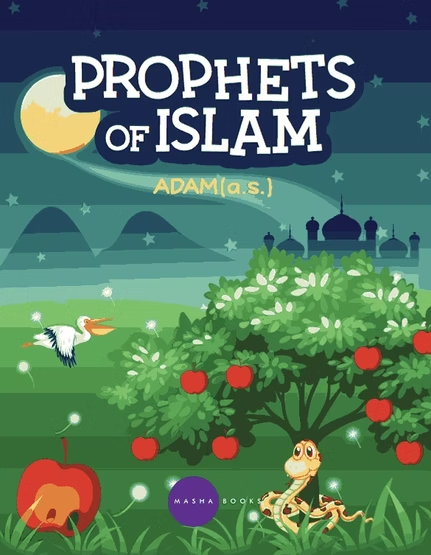
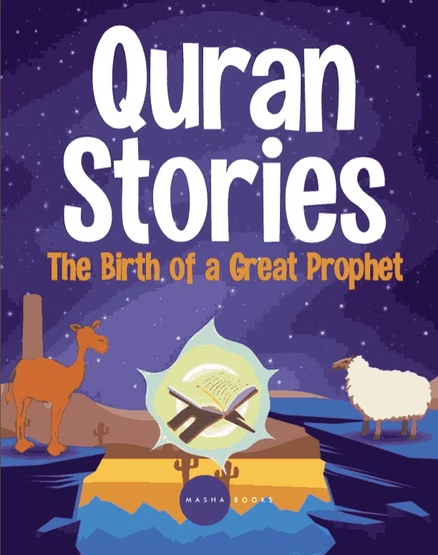
Literature is a powerful tool for teaching and moral development, especially for young readers. Islamic children’s books are vital resources that help shape a child’s understanding of their cultural and religious identity. These stories are filled with important lessons and morals, making it crucial for children to have literature that aligns with their beliefs as the world becomes more multicultural.   By 2030, the global Muslim population is projected to reach nearly 2.2 billion, highlighting the need for relatable literature. As parents strive to instill Islamic values early on, these books play a significant role in young minds development. This article explores the growing interest in Islamic children’s literature, its benefits, common themes, recommended titles, market challenges, and the future of this important genre. The Growing Demand for Islamic Children’s Books Overview of the Global Muslim Population The Muslim population is rapidly growing, with estimates suggesting they will make up nearly 30% of the world’s population by 2060, according to the Pew Research Center. This growth highlights the need for literature that reflects their cultural and religious backgrounds. Many parents seek books to help their children understand Islam, fostering a sense of identity and belonging. Muslims live in diverse regions, making localized Islamic children’s literature essential. Countries like Indonesia, Pakistan, India, and Bangladesh have unique cultures that require stories tailored to resonate with young readers. This representation in literature is crucial for helping children connect with their cultural identity. Rising Awareness Among Parents Parents today recognize that early education shapes character. Many Muslim families prioritize teaching their children about faith and heritage, making Islamic children’s books essential. These books entertain while educating kids about cultural values and history. Research shows parents seek books reflecting their children’s backgrounds. A 2020 survey found that 80% of parents value culturally resonant literature. This awareness drives interest in Islamic children’s literature, promoting cultural pride and a deeper understanding of faith among young readers. Key Benefits of Islamic Children’s Books Cultural and Religious Identity Islamic children’s books play a vital role in shaping cultural and religious identity. They feature relatable characters and engaging stories that connect children to the broader Muslim community. Through these narratives, kids learn about Islamic values and traditions, deepening their bond with their faith. Moral and Ethical Development Islamic children’s books are crucial for both cultural identity and moral growth. They often emphasize values like kindness, honesty, compassion, and respect, which are core to Islamic teachings. By presenting these ideas in relatable ways, authors help children understand the importance of good character. For example, “The Caring Elephant” encourages children to be thoughtful and kind to others and all living things. This story reinforces the idea that good deeds are rewarded in this life and the next, inspiring kids to embrace kindness and empathy in their everyday lives. Encouraging Literacy and Learning Islamic children’s books captivate young readers, making learning about faith and culture enjoyable. Their engaging narratives present complex concepts in accessible ways, enhancing language skills and critical thinking. Studies show that culturally relevant texts improve reading habits and comprehension. The Journal of Literacy Research highlights that students who read materials reflecting their backgrounds exhibit better engagement and understanding. Thus, it’s essential for kids to access books that resonate with their values. Want to know more about how book publishing and distribution companies work? Click here to read Popular Themes in Islamic Children’s Literature Stories from the Quran and Hadith Islamic children’s books creatively adapt stories from the Quran and Hadith to engage young readers. These narratives, such as the compassion of Prophet Muhammad (PBUH) and the lessons from Prophet Yunus (Jonah), teach important Islamic values in a way that is both entertaining and educational. A great example is “The Story of the Prophet Muhammad,” which presents his life and teachings in a simple, relatable manner. By focusing on key events, this book encourages children to reflect on and emulate the Prophet’s exemplary character. Historical Figures and Events in Islam Islamic children’s literature features important figures like Prophets and influential women, serving as role models for young readers. These stories teach bravery and wisdom, helping children understand Islamic history’s significance. For example, “Women in Islam: A Guide for Young Readers” introduces figures like Khadijah (RA) and Aisha (RA), highlighting their essential contributions to Islamic civilization. Everyday Life and Values Islamic children’s books not only cover religious themes but also depict the everyday lives of Muslim families. These relatable stories address modern challenges and highlight the importance of family, community, and God’s role in daily life, helping children connect with their culture. For example, My First Ramadan illustrates the significance of Ramadan and fasting through familiar characters, teaching values like self-control, appreciation, and kindness, and instilling vital Islamic principles from an early age. Recommendations for Islamic Children’s Books Here are some Islamic children’s books that we think young readers will really enjoy. These books cater to different interests and age groups: Stories from the Lives of the Great Prophets: This series focuses on key moments in the lives of four revered Islamic prophets: Adam (a.s.), Ibrahim (a.s.), Musa (a.s.), and Isa (a.s.). Each book explores the personal journeys, trials, and profound lessons these prophets imparted, offering insight into their dedication to spreading the message of Allah. The stories emphasize Islamic values such as faith, patience, and leadership, providing readers with valuable life lessons grounded in the teachings of the Quran. Quran Stories – The Birth of a Great Prophet: This book focuses on the miraculous birth and early life of Prophet Ibrahim (a.s.), one of the most significant figures in Islamic history. It explores how, even as a child, Ibrahim (a.s.) rejected idol worship and embraced the belief in one God. Through engaging storytelling, readers learn about his deep faith and conviction, setting the stage for his future as a great prophet. The book offers important lessons in faith, resilience, and courage, making it an inspiring story for readers of all ages. Prophets of Islam: Prophets of Islam is an enlightening

Scroll to Top