

Best Islamic Bedtime Stories for Toddlers and Kids
Every parent eventually lands on the same nightly question: what do we read tonight? For Muslim families, that question has an easy answer when there’s a shelf of short, age-appropriate Islamic stories ready to go. This guide breaks down exactly what to look for and which titles work best at each age, so bedtime becomes a routine you don’t have to think about every night.
What makes a bedtime story actually work at bedtime
Not every good Islamic children’s book is a good bedtime book. A strong bedtime story is short enough to finish in one sitting (five to ten minutes), calm rather than exciting, and ends on a settled, positive note rather than a cliffhanger. Look for these three things before you buy:
- One clear lesson per story: patience, honesty, gratitude, or kindness to animals rather than several ideas competing for a sleepy child’s attention.
- Simple, warm illustrations: busy or dark artwork can be overstimulating right before sleep.
- A short length: a book your child can finish without asking “one more page” for the fifth time.

The best titles, organized by age
Ages 2–4:
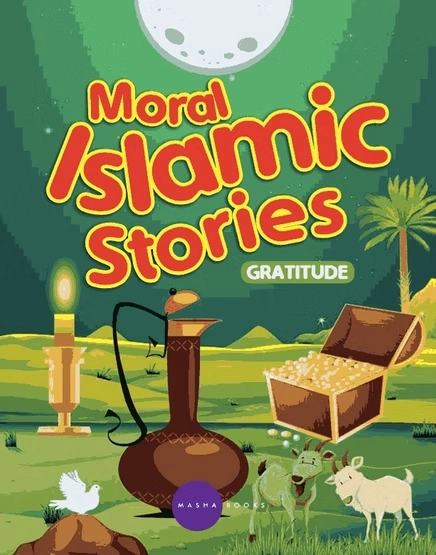
one idea, one sitting. Look for very short story collections such as our Moral Islamic Stories series, where each title (Better to Give, The Wise Boy, and The Fruit Garden) teaches a single, simple value in just a few pages.
Ages 5–7:
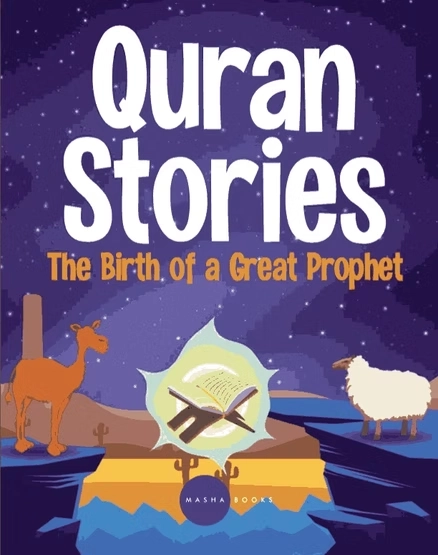
Full short stories. This is the age for complete Quran and prophet stories: Prophet Yunus and the whale, Prophet Sulaiman and Queen Bilqis, Prophet Ibrahim’s courage, and the story of the elephant army in Surah Al-Fil. Each one has a clear beginning, middle, and end that a child can follow and retell the next day.
Ages 8–10:
Longer collections. Children at this age can handle richer detail and multi-chapter collections, such as the 30-title Companions of the Prophet Muhammad series or Stories from the Lives of the Great Prophets, which they can start reading a page or two of independently before a parent finishes the story aloud.

Building a routine your child looks forward to
- Let your child choose the book from a small, curated shelf: three or four titles, not an overwhelming pile.
- Read at the same time every night. Consistency matters more than the specific time.
- Pause once during the story to ask a simple question (“What do you think he did ‘next?”). This keeps a sleepy child engaged without over-stimulating them.
- Close with a short dua for sleep, said together.
- Repeat the same few books for a week or two before rotating in new ones. Repetition is how young children actually absorb a lesson, not a sign you need more books.


Why this beats a screen at bedtime
A physical book has no notifications, no autoplay, and no blue light delaying your child’s sleep. It also does something a screen never will: it puts the story in your voice, in your child’s own language and at your child’s own pace, which is exactly what makes it memorable years later. Most adults can still recall a bedtime story their parent used to read but seldom a show they watched before bed.
Shop the full collection
Masha Books has published over 250 titles for children and adults, including the Quran Stories, Prophets of Islam, and Moral Islamic Stories series referenced above. All written for exactly this kind of nightly reading. Browse and shop the full collection on Amazon.
Looking for stories for your specific country?
See our guides for Muslim families in the USA, the UK, and the UAE.
Frequently asked questions
What is the best age to start Islamic bedtime stories?
Around age two, using very short, single-idea picture books. The exact content matters less at this age than building the habit itself.
How many books do I really need?
Three or four in active rotation at any time is plenty. A large collection you cycle through slowly is more useful than dozens sitting unread on a shelf.
Should I read in English, Arabic, or both?
Whatever your child understands most comfortably. Our books are written in clear English so that parents anywhere in the world can read them aloud with confidence, regardless of their Arabic fluency.
My child wants the same story every single night. Is that a problem?
No, it’s a good sign. Repetition is exactly how young children absorb a story’s lesson. Let them lead, and rotate in a new title only when they start asking for something different themselves.